Clean claims in, fewer denials out, and a model that keeps up
A claims pipeline that accounts for every row, a model that scores each claim before it's sent, and checks that retrain themselves when a payer changes the rules.
Built for Camber · the short version
Clinics lose weeks and revenue to denied claims, and payers change their rules without warning, so the data and the checks have to keep up on their own.
In this sample, 261,750 raw rows reconcile to 250,000 clean claims, the riskiest tenth of claims holds 45% of denials, pre-submission checks cut the denial rate from 15% to 6%, and a payer's unannounced prior-auth change is caught and turned into a rule within a week.
Built on sample data. To make it real, I'd use A sample of 837 claims and 835 remits with CARC codes, payer policy tables, and the current pipeline's data tests.
Who built it
Anirudh Devella, data scientist. Before this, in production:
- Cross-company technician benchmark behind raises and bonuses at Bluelight (YC)
- Forecast error cut from 13% to 8.3% at Bluelight (YC)
- AI Coach that raised engagement for 10,000+ athletes at Brandlete
- 150K leads scored to retarget direct mail at CoverRight
“I’d hire him again.” Alex Dixon, Co-founder, Bluelight (YC), managed Anirudh directly. Read it on LinkedIn
Generated in your browser from a fixed seed, so every visitor sees the same numbers.
Next step
My first week with your real data
- Reconcile one month of raw claim files against the warehouse and list every row that went missing or changed, with a reason.
- Score last quarter's claims with a simple denial model and check how many denials sat in the riskiest tenth.
- Scan recent remits for bursts of one denial reason at one payer, the earliest sign of an unannounced policy change.
You might also like
Similar case files
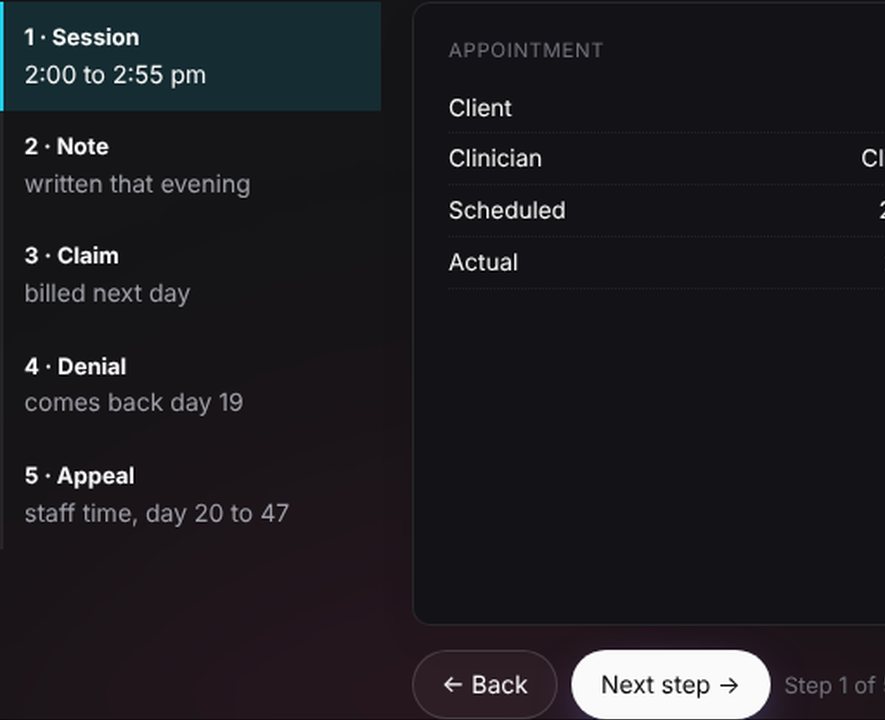 Adentris · Case 001Follow one claim all the way to paymentWalks one therapy claim from note to payment, and shows how a check before billing gets more claims paid the first time.Open the case →
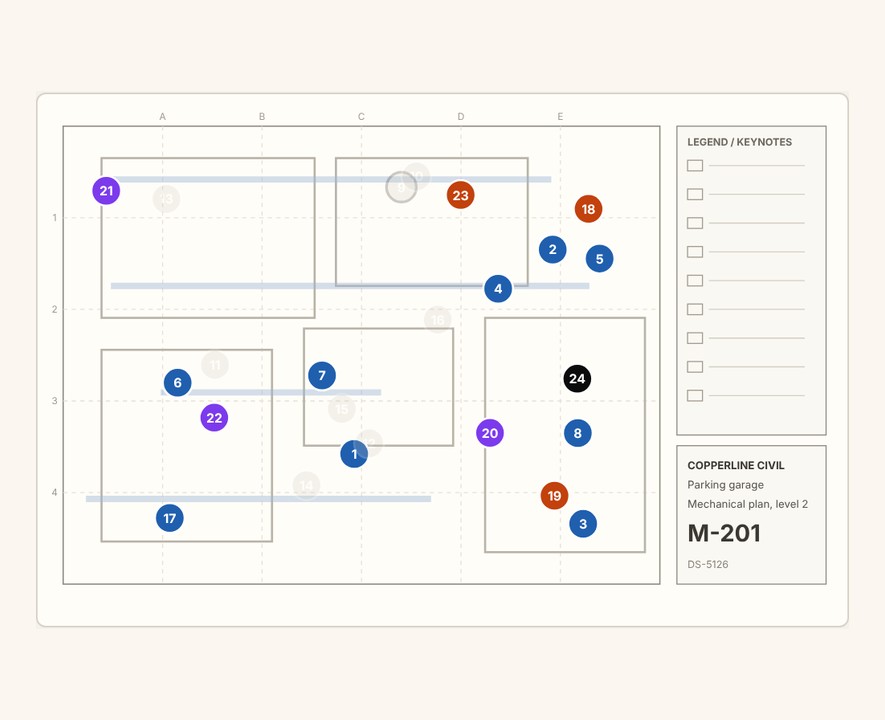 Structured AI · Case 019Measuring whether Structured AI's QA/QC flags are rightOne drawing sheet from 300 simulated sets, with simulated vision-model flags on it. Turn on fixed rules, a cutoff per check type, cross-sheet checks and rules learned from engineer dismissals, and watch which flags disappear, which appear, and what happens to accuracy and cost.Open the case →
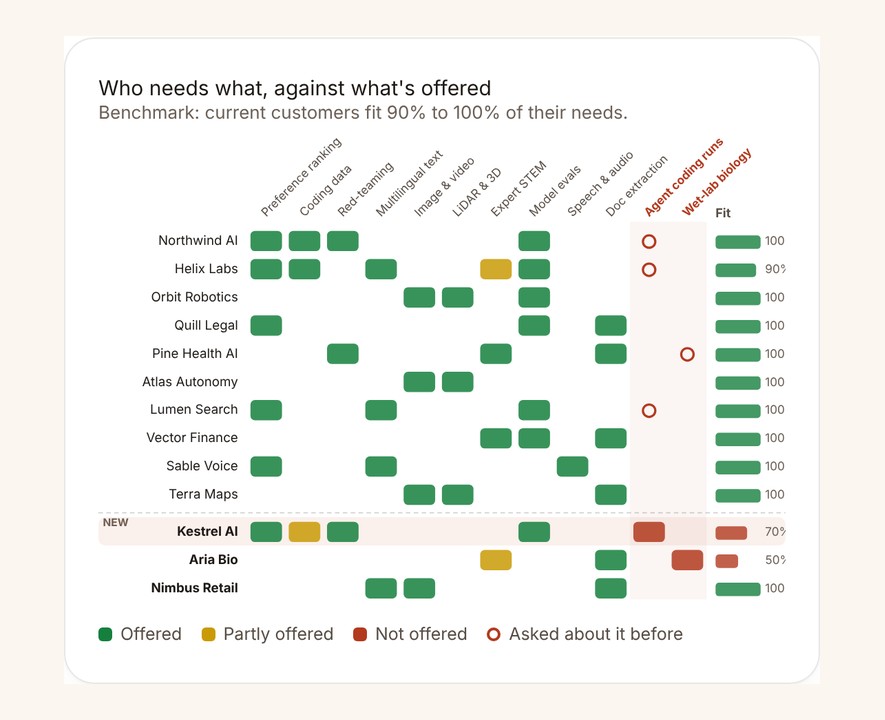 Scale AI · Case 022From one customer's gap to a product the next ten can buy13 invented AI customers scored against a simulated data catalog. New customers outside the benchmark get a gap report for management, a build plan, a handoff per team, and a fixed rule for whether the solution becomes a catalog product.Open the case →