Catch the AI Manager's mistakes before the owner does
Each suggestion gets checked against the store's own data, graded by severity, traced to the step that caused it and rerun until it's right.
Built for Santé · the short version
Santé's agents make decisions owners act on, so a wrong discount, price, invoice cost, match or message has to be caught before it reaches the store.
In this sample, over a third of the agent's discount proposals shouldn't run because their season sells the stock, the rules catch 93% of planted invoice reading errors, and measuring shoppers by their own rhythm cuts win-back false alarms from 512 to 16.
Built on sample data. To make it real, I'd use A log of AI Manager outputs with what the owner accepted, Langfuse traces, a sample of invoice photos with corrected lines, and loyalty visit history.
Who built it
Anirudh Devella, data scientist. Before this, in production:
- Cross-company technician benchmark behind raises and bonuses at Bluelight (YC)
- Forecast error cut from 13% to 8.3% at Bluelight (YC)
- AI Coach that raised engagement for 10,000+ athletes at Brandlete
- 150K leads scored to retarget direct mail at CoverRight
“I’d hire him again.” Alex Dixon, Co-founder, Bluelight (YC), managed Anirudh directly. Read it on LinkedIn
Generated in your browser from a fixed seed, so every visitor sees the same numbers.
Next step
My first week with your real data
- Turn the five rule sets into an offline eval harness in Langfuse and run them over last month's agent outputs.
- Score each rule against what owners accepted or corrected, and drop or retune the ones that flag good outputs.
- Wire the rerun loop into the slow-stock agent first, since a missed season costs margin on every store.
You might also like
Similar case files
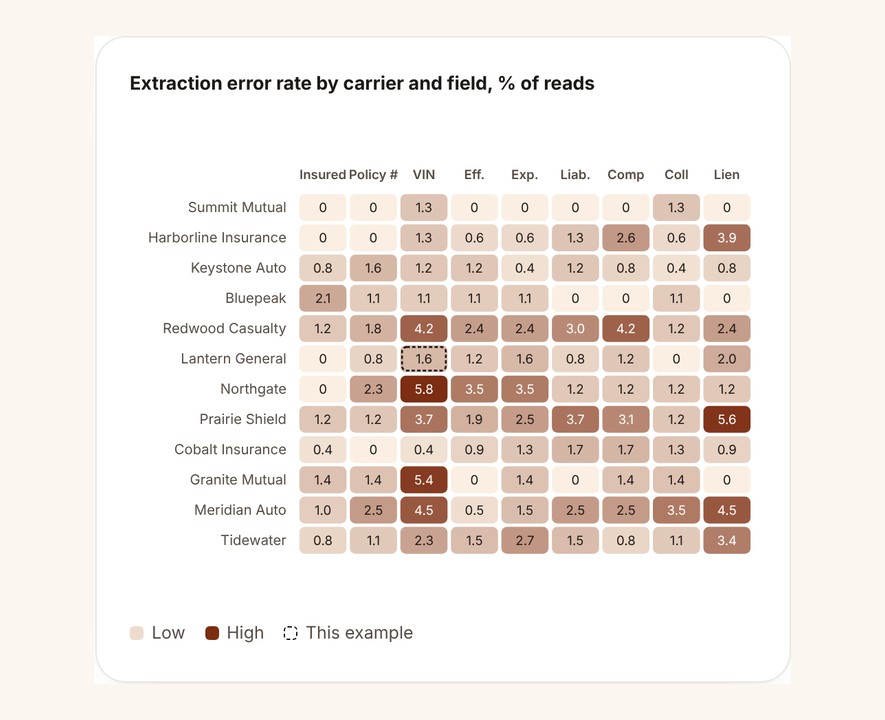 Axle · Agent evals · Case 018An evaluation layer for Axle's insurance data agents2,000 simulated auto policies, five agent steps: reading the page, standardizing coverage labels, resolving conflicting sources, lender decisions and healing after a carrier changes its layout. Each step gets fixed rules that catch a mistake, grade it, trace it and rerun it.Open the case →
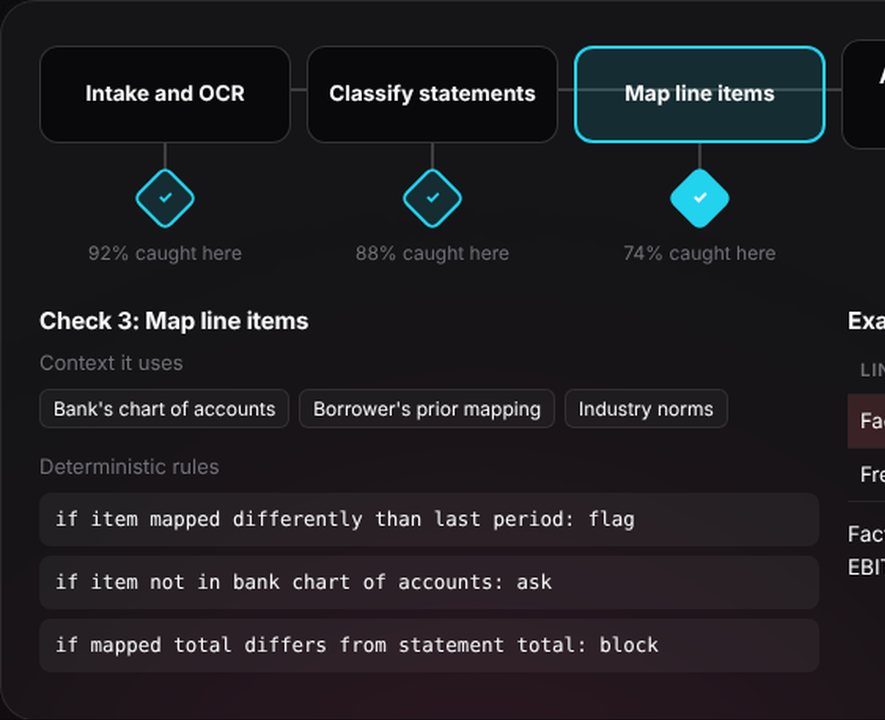 Accend · Case 008A check at every stepAn eval check under every step of spreading a financial statement, plus a track record for every reviewer.Open the case →
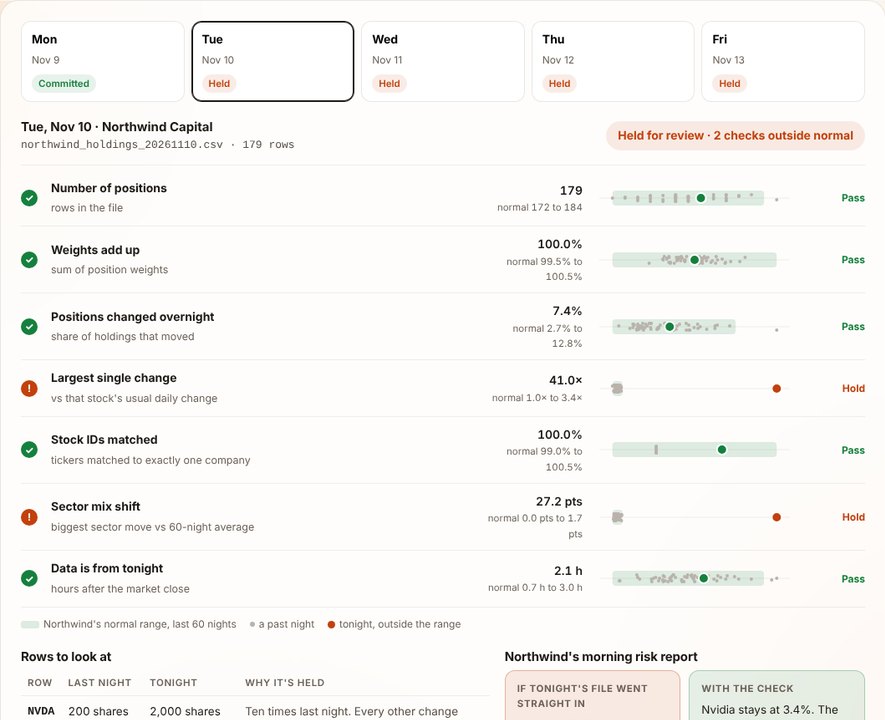 Bayesline · Upload check · Case 013A check before every nightly uploadLearns what a normal night looks like for each client, commits clean files on its own, and holds the odd one with the exact rows to look at.Open the case →